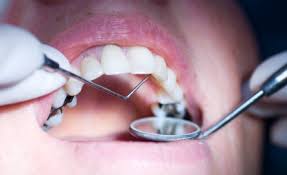
THE TOXIC IN MOUTH
In addition to avoiding toxins from water, food, etc., another step we must take is to go to a dentist to replace metal fillings (amalgams) with others that do not contain metals or toxic.
It is preferable to go to a holistic dentist, since many dentists still mistakenly believe that amalgams are not harmful. We could say that these amalgams are the second most important cause of poisoning after water. In the next articles, we will delve into the topic of Heavy Metals. For the moment, we will limit ourselves to those we find in the mouth.
Dental amalgams contain Mercury, Thallium, Lanthanides and 70 others. Among the innumerable problems that cause heavy metals, one of them is to prevent the absorption of minerals that are necessary for proper organic functioning.As they compete with them in their absorption. They also cause hormonal, allergic and immunosuppression imbalances.
Poisoning is slow and gradual and is more frequent than acute poisoning. The effects they cause on our health are very destructive and have not been taken into account by health professionals.
Why are heavy metals so dangerous?
– Heavy Metals catalyze oxidation reactions and therefore stimulate the production of free radicals.
– Prevent the absorption of minerals and trace elements, necessary for enzymatic reactions, thus causing innumerable metabolic blocks.
– They can change the structure of proteins and of course, the antibodies of our immune system.
– The lipid structures, which are present in all cells, can be modified, so the entry and exit of nutrients can be impaired.
Subclinical heavy metal poisoning is increasingly the cause of multiple disorders.
Although the denomination «Heavy Metals» is very widespread, other minerals whose density is less than 5gr. /mm3 (density from which a metal is considered heavy), such as Beryllium, Aluminum or Titanium are also highlytoxic. Heavy metal poisoning can be defined as an excessive accumulation of metals in the tissues, which cause damage to the body for the following reasons.
– Interactions with essential metals by electrical similarity.
– They form metal-protein complexes with inactivation of their function (which can also affect the hormones).
– They produce enzymatic inhibition of proteins with SH- groups.
– Affects the correct function of cellular organelles: mitochondria, lysosomes, microbubules…
The heavy metals are the minerals given their similarity. They also replace the essential minerals such as magnesium, zinc, copper, molybdenum or manganese, but are unable to activate the enzymatic function, so the result is enzymatic inhibition and the consequences are disastrous.
Dr. Hulda Clark does not give an example: Alzheimer’s disease, which is characterized by an increase in the levels of aluminum in the body, especially in the brain. This results in an inhibition of glycolytic enzymes responsible for degrading glucose to obtain ATP. Finally, the neurons do not receive enough energy, decreasing their activity and finally die of hunger.
This is just one example among dozens of existing cases of enzyme inhibitions. Any enzymatic inhibition of a major metabolic pathway will have truly disastrous consequences. Other examples are the energy-producing enzymes that are part of the glycolysis of the Krebs cycle, which are part of the electron transport chain …
We will continue talking about Heavy Metals in the following article …
Dejar una contestacion